Therapy
Therapy for children, young people and families
Therapy at Surrey Child Psychology offers a safe, supportive space to explore and understand difficult feelings, helping children, young people and families on their journey to feeling better.
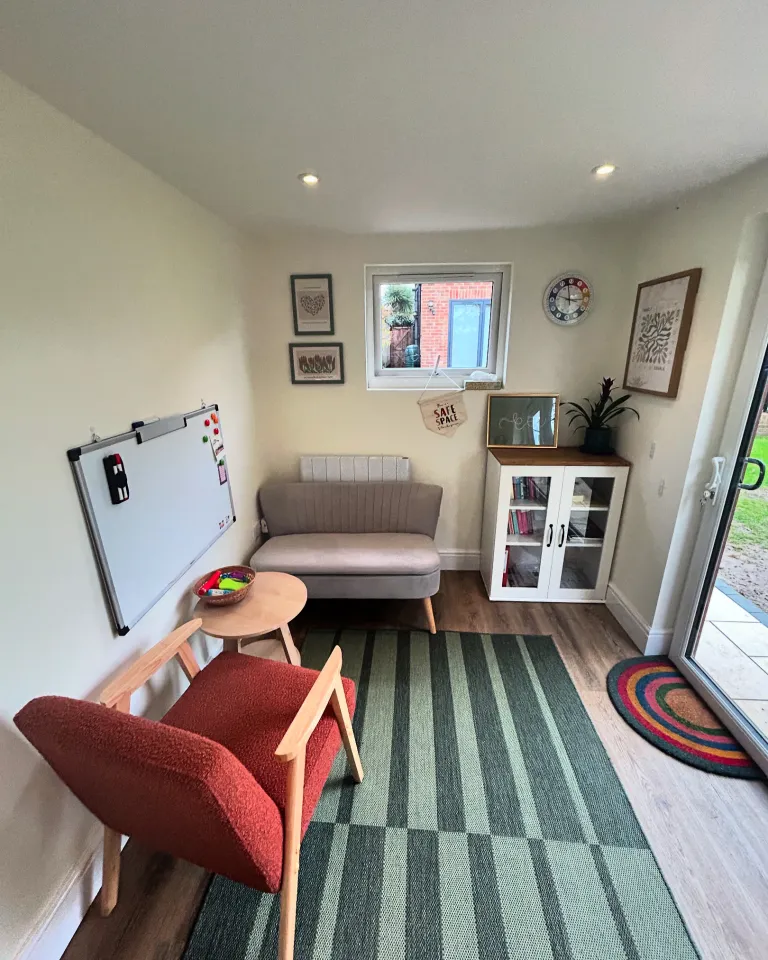
A warm, supportive space
Feelings of low mood or anxiety are common across all ages, affecting children, adolescents and adults. While these emotions may fade over time for some, they can persist for others, making it challenging to navigate everyday life.
As parents, we all wish for our children to find happiness and fulfilment, to build meaningful, positive relationships and to develop the resilience needed to face life’s obstacles.
I provide a warm, non-judgmental environment to address a range of difficulties.
Areas I can support with
Therapy may help with
Pre-school
- Feeding
- Toileting
- Behaviour and emotion regulation
- Fears and phobias
- Separation anxiety
Children & adolescents
- Low mood
- Anxiety
- Obsessive Compulsive Disorder (OCD)
- Post-traumatic stress
- Emotion regulation
- Behaviour that challenges
- Emotionally based school avoidance
- Attention and concentration issues
- Perfectionism
- Self-esteem
- Understanding neurodiversity and its impact
Parenting
- Parenting advice and support
- Promoting strong parent-child relationships
- Supporting secure attachment
- Adjusting to change and transition
Therapeutic approaches
Clinical Psychologists are trained to work using a number of models. In our work together we may use:
- Acceptance & Commitment Therapy (ACT)
- Cognitive Behavioural Therapy (CBT)
- Narrative Therapy
- Compassion Focused Therapy (CFT)
- Dialectical Behavioural Therapy
- Mindfulness
- Systemic Family Therapy

Accessing support
What happens next?
I understand reaching out can be daunting. Below are the steps involved in accessing support.
Registration forms and information gathering
Firstly, I offer a free 15 minute telephone conversation to see if we might be a good fit. If we agree to proceed to assessment, I will ask you to complete a registration form which will ask for information about the presenting difficulty in more detail.
Psychological assessment (£120 - 50 minutes)
We will then have an assessment session together. We usually start with parents present and I will often then speak to young people on their own, if they feel comfortable. This allows me to gain a more in-depth understanding of the problem(s). We will subsequently formulate together and agree a therapeutic plan.
I may ask you to complete standardised questionnaires to provide further information.
Therapy sessions (£120 - 50 minutes)
Duration and frequency of sessions may vary depending on individual needs, progress and the nature of the issues being addressed. We will have a review session around session 6.
Personalised support
No child, young person or family are the same and I recognise that there is no one-size-fits-all approach. Therefore, the advice and support provided is personalised to address the unique needs of each young person and family. When we meet, we will discuss what model or models might be most helpful. I work integratively, drawing upon multiple models. I offer therapy in line with National Institute for Health and Clinical Excellence (NICE) guidelines.
I find out what is important to young people and families and work together to reach their goals. I provide flexible independent clinics to children, young people and parents and can link in with schools and other agencies where needed.
I am a strong advocate for early intervention and prevention. If you have concerns about a child, please don’t hesitate to reach out.
Frequently Asked Questions
Confidentiality policy
If an individual is over 16 years old, they can self-refer and attend sessions without parental consent. If someone is under 16, a parent or guardian will need to accompany them to sessions.
I offer private sessions for family members, including children and young people, and will discuss what information can be shared and how. There are some circumstances where confidentiality may need to be broken, for example if there are serious concerns about safety or harm.
Do you provide crisis support?
I am unable to provide a crisis service. If someone is at immediate risk, please contact emergency services on 999 or attend your nearest A&E department. If the situation is not an emergency but you still have concerns, please contact NHS 111 or your GP.
How do I pay?
If you are accessing support via an insurer, I will discuss this with you. For self-funding clients, I will send an invoice.
Can you make reasonable adjustments?
Accessing therapy can be tricky. I strive to make therapy as accessible as possible. We will work together to consider how best to meet the child’s needs, for example making sessions shorter and/or spending time outside.
Do you accept payment through insurance providers?
I accept referrals through most insurance companies and can discuss this with you directly.